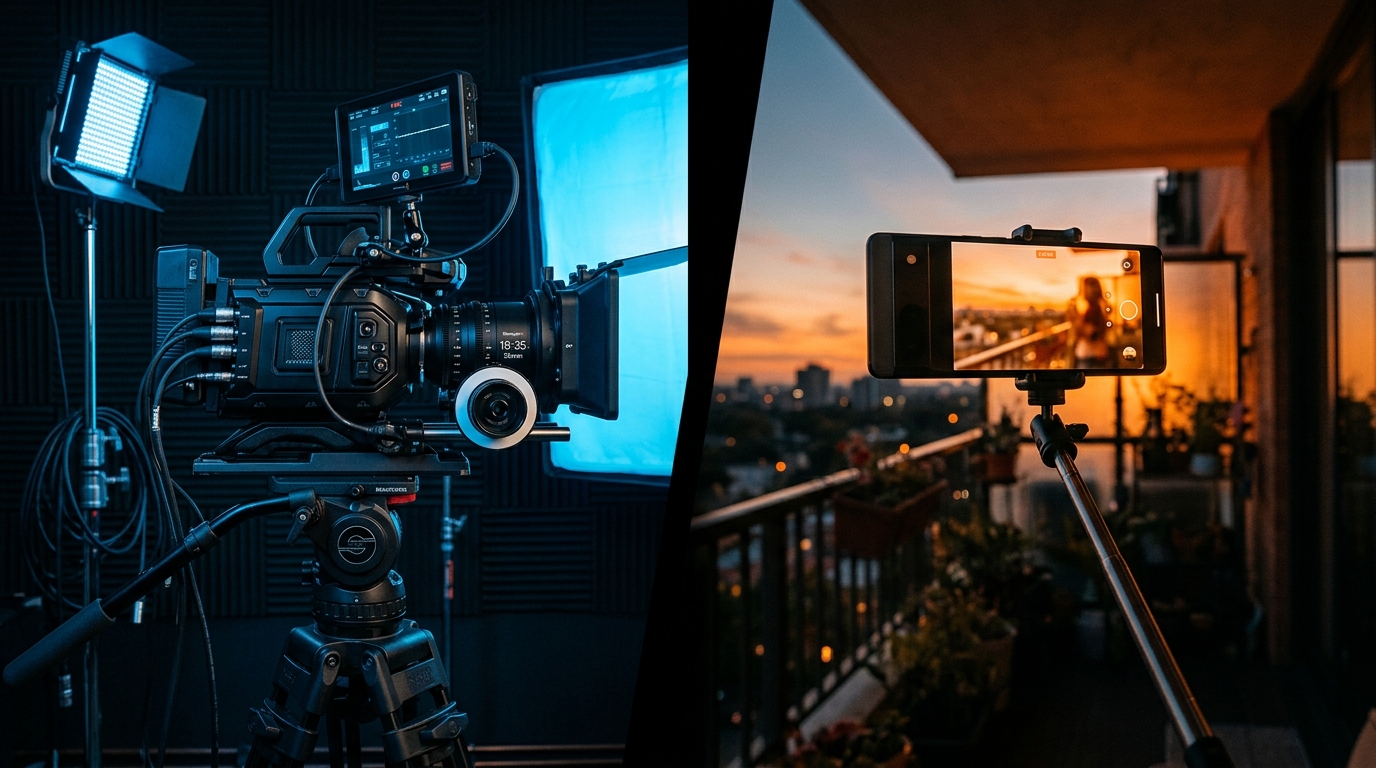
UGC Ads vs. Traditional Ads in 2026: What's Actually Working (With Data)
UGC ads now outperform studio-produced creatives by 2-4x on Meta and TikTok. Here's exactly why, what formats are winning, and how to create UGC-style ads that convert — even without creators.
The most expensive ad creative your team has ever produced is probably getting outperformed by a 22-year-old talking into her phone in a messy kitchen.
This isn't a hot take. It's what the data shows — consistently, across industries, at every budget level.
UGC-style ads now drive 2-4x better cost-per-acquisition than polished studio creatives on Meta and TikTok. But "UGC" in 2026 doesn't mean what it meant in 2023. The format has evolved, the platforms have changed, and the strategies that worked even 12 months ago are burning money today.
Here's what's actually working right now.
The Numbers: Why UGC Wins
Let's start with what we know:
- Meta's internal research shows that ads perceived as "authentic" generate 47% higher click-through rates than polished brand content
- TikTok reports that creator-style content has 83% higher engagement than brand-produced videos
- Industry benchmarks from Q1 2026 show UGC ads averaging $12-18 CPA in ecommerce, versus $35-55 for traditional creatives in the same verticals
A $50,000 studio production that feels native to the platform will outperform a lazy selfie video. And a carefully scripted, professionally lit "UGC" ad will outperform a genuine but boring customer testimonial.
The format matters less than the feeling.
What "UGC" Actually Means in 2026
The definition has shifted significantly:
UGC in 2023: Real customers filming real reviews with their phones
UGC in 2024-2025: Paid creators filming scripted content designed to look like organic posts
UGC in 2026: Any content that matches the visual language of organic social media, regardless of who creates it or how much it costs to produce
The categories now look like this:
1. Creator UGC (Still Working)
Paid creators filming in their own environment with natural lighting, phone cameras, and a conversational tone. The key evolution: creators now need specific performance — hitting exact hooks, demonstrating products in prescribed ways, and following direct response script structures.2. AI-Generated UGC (Rising Fast)
AI-generated talking heads, product demos, and lifestyle clips that are increasingly indistinguishable from real creator content. Tools like Veo, Kling, and others can now produce photorealistic "people" delivering scripted hooks. The ethics are debated; the performance numbers are not.3. Employee/Founder UGC (Underrated)
The founder or team member talking directly to camera. This carries built-in authority and authenticity that hired creators can't replicate. The "behind the scenes" angle — showing the warehouse, the office, the process — is performing exceptionally well in 2026.4. "Mundane B-Roll + Text" (The Dark Horse)
No talking head at all. Just everyday footage — someone eating breakfast, folding laundry, walking through a house — with text overlay cards telling a story. The banality of the visuals creates contrast with the compelling text, and the viewer processes both simultaneously.This last format is worth special attention. Some of the highest-performing ads we've tracked in our swipe file use "unbothered mundane" B-roll with stacked text cards. The person in the video looks bored. They're not performing. They're not even looking at the camera. But the text is telling a transformation story that hooks the viewer immediately.
The 5 UGC Formats Winning Right Now
Format 1: The Problem-Agitation-Solution Talking Head
Structure: Creator identifies a problem the viewer has, twists the knife on how annoying it is, then presents the product as the obvious solution.
Duration: 15-30 seconds
Key elements:
- Opens with a pain statement, not a product mention
- The "agitation" phase uses specific, relatable scenarios
- The product demo is under 5 seconds
- CTA is conversational ("Link in my bio" or "I'll drop the link")
Why it works: The viewer doesn't realize it's an ad until they're already emotionally invested in the problem. By the time the product appears, they want the solution.
Format 2: The "POV You Just Discovered" Screen Recording
Structure: Screen recording of the creator discovering, ordering, or using the product — presented as a genuine first reaction.
Duration: 20-45 seconds
Key elements:
- "POV" framing creates identification
- Genuine-sounding reactions ("wait, this actually works?")
- Shows the full purchase/use journey
- Often includes price reveal as a positive surprise
Why it works: Screen recordings feel like you're looking over someone's shoulder. There's an intimacy to it that polished ads can't replicate. The price reveal moment — when the viewer sees it's cheaper than expected — creates an impulse trigger.
Format 3: The Side-by-Side Comparison
Structure: Direct visual comparison between the viewer's current solution and the advertised product.
Duration: 15-30 seconds
Key elements:
- Split screen or quick-cut between options
- The "old way" is intentionally frustrating to watch
- The "new way" is satisfying and fast
- Minimal talking — the visual contrast does the selling
Why it works: Comparison ads work because they make the decision binary: old way (bad) vs. new way (good). The viewer doesn't have to think about whether they need the product — they just have to agree that the current way is worse.
Format 4: The Comment-Trigger Hook
Structure: The ad presents valuable information and asks viewers to comment a keyword to receive more. An automation then DMs them with an offer link.
Duration: 30-60 seconds
Key elements:
- The hook promises specific, actionable value
- Content delivers 70% of the value upfront (builds trust)
- CTA is "Comment [KEYWORD] and I'll send you [the rest]"
- Automation handles the DM → landing page → conversion flow
Why it works: Comments are the strongest engagement signal on Meta. Every comment pushes the ad to more feeds organically. The DM creates a private, high-intent conversation. The conversion happens off-platform where there's no competition for attention.
This is the single most effective organic-to-paid bridge we've seen in 2026. Accounts running this format are seeing 3,000+ comments per reel with conversion rates 3-5x higher than traditional link-click ads.
Format 5: The Unboxing/First Impression
Structure: Real-time reaction to receiving and using a product for the first time.
Duration: 30-60 seconds
Key elements:
- Package arrival builds anticipation
- Genuine reactions (surprise, delight, skepticism-to-conversion)
- Product demo happens naturally within the unboxing
- Often shot vertically, handheld, in the creator's home
Why it works: Unboxing videos tap into the brain's reward anticipation system — the same dopamine pathway triggered by opening presents. The viewer experiences the excitement vicariously, which creates positive product association before any rational evaluation.
Traditional Ads: When They Still Win
UGC isn't universally superior. There are scenarios where traditional creative outperforms:
Luxury and premium positioning. If your brand's value proposition is exclusivity, a phone-recorded testimonial undermines the positioning. Brands like Apple, Cartier, and high-end SaaS products still benefit from cinematic production.
Complex product demonstrations. Enterprise software, technical products, and anything requiring detailed visual explanation often needs professional motion graphics and screen captures that UGC can't deliver.
Retargeting warm audiences. People who already know your brand respond better to polished, brand-consistent creative that reinforces their existing perception. UGC is for first impressions; brand creative is for reinforcement.
Brand awareness at scale. When the goal is memorability rather than immediate conversion, distinctive visual branding (consistent colors, typography, imagery) outperforms UGC which — by design — blends into the feed rather than standing out from it.
The Hybrid Approach: What Smart Brands Are Doing
The best-performing ad accounts in 2026 aren't choosing between UGC and traditional. They're running both in a structured testing framework:
Cold traffic (TOFU): 70% UGC, 30% polished brand creative. UGC stops the scroll; brand creative builds recognition.
Warm traffic (MOFU): 50/50 split. UGC testimonials for social proof; brand creative for positioning.
Hot traffic (BOFU): 60% brand creative with clear offers, 40% UGC with direct CTAs. People ready to buy respond to confidence and clarity.
This isn't a fixed ratio — it's a starting framework. Let your data determine the optimal mix for your audience.
How to Study What's Working
The fastest way to improve your ad creative is to study what's already performing. Not in theory — actual ads that are running right now, spending real money, at scale.
Meta Ad Library lets you see every active ad from any advertiser. TikTok Creative Center surfaces top performers by industry. But seeing ads isn't the same as analyzing them.
For every UGC ad you find that's been running for 30+ days (a strong signal it's profitable), ask:
- What's the hook? First 3 seconds — what stopped the scroll?
- What format is it? Talking head, screen recording, split-screen, text overlay?
- What's the script structure? Problem-solution? Story? List?
- Where does it send traffic? Landing page? DM automation? Direct checkout?
- How long has it been running? Longevity = profitability.
SwipeBase was built to make this process automatic. Capture any ad URL and AI extracts the hook, analyzes the script structure, identifies the emotional triggers, and categorizes it for future reference. But a notebook works too — the analysis habit matters more than the tool.
Build your competitive intelligence library
Capture ads, analyze hooks, track competitors — all in one place. Free to start, no credit card required.
Start Free →